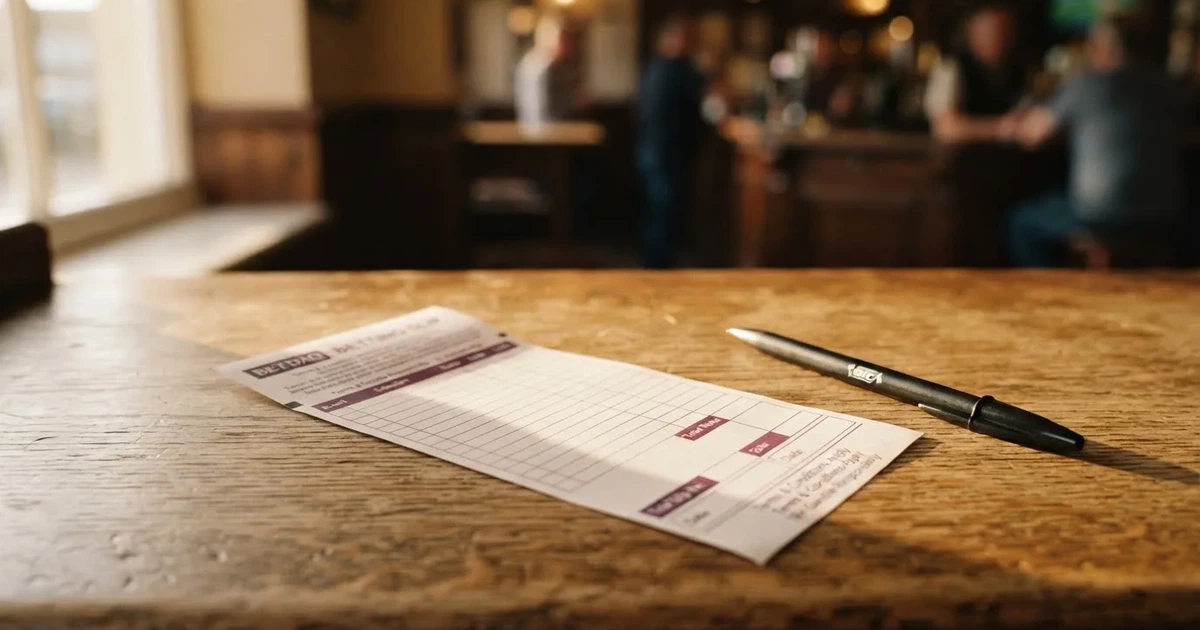
How to bet on sports in New Zealand
 Available in US
Current as of 30 October 2026 and checked against the Racing Industry Act 2020, the Racing Industry Amendment Act 2025, the Department of Internal Affairs register of authorised operators, and TAB New Zealand’s published terms.

Betting on sport in New Zealand is not the free-for-all the offshore marketing makes it look. A 2025 amendment to the Racing Industry Act 2020 closed the door on every online sports and racing bookmaker except one group, and gave that group — TAB New Zealand, trading online as TAB and Betcha — a monopoly on a market most punters in other countries shop around in. The market for New Zealand customers is, by law, two brands of one operator. That is the first fact a punter here needs, and the rest of the page is what follows from it.
Table of Contents
- The lawful route: TAB NZ, TAB and Betcha
- The fixture: what the law opens, and what it shuts
- Safeguards: the harm-minimisation regime that does, and does not, reach you
- Selection, settling, staking: how a price turns into a payout
- Fixtures: the sports and tournaments TAB NZ covers
- Walkthrough: how a bet actually goes through
- The shortlist: ten brands the punter meets
- What the price keeps: the margin and how to read it
- The assessment: what a New Zealand punter is actually choosing
- Frequently asked questions
The lawful route: TAB NZ, TAB and Betcha
A punter in New Zealand who wants to bet online on racing or sport has, by law, two apps to choose from, and both belong to the same group. TAB NZ is the statutory body that holds the right to take such bets under section 74AAA of the Racing Industry Act 2020, inserted by the Racing Industry Amendment Act 2025 and in force since 28 June 2025. Its retail and online brand TAB, and its online-only sister brand Betcha, are the only places a person in New Zealand can lawfully place an online sports or racing bet. There is no second operator to compare them against and no licence to apply for; there is no licence register because there is only one lawful provider.

That is the whole market on the lawful side. The Department of Internal Affairs told unlicensed providers serving New Zealand to withdraw with immediate effect once the new section took effect, and the offshore operators that New Zealanders used to use — Bet365, Sportsbet, the Australian exchanges, the rest of the list — are no longer lawful for New Zealand customers even where their sites still load. A punter who logs into one is not breaking New Zealand law; section 19(4) of the Gambling Act 2003, inserted in 2025, says an individual cannot be convicted for placing a bet with an offshore operator in breach of section 74AAA. The operator is the one breaking it. The point matters because it changes what risk sits where: the offshore brand takes the legal risk, the punter takes the practical one.
The practical risk is real. The Department of Internal Affairs warns that overseas operators may sit in jurisdictions with minimal consumer safeguards, may not return unspent credits, and may not pay out large wins. There is no New Zealand complaints route to take a dispute to and no harm-minimisation framework that reaches them. The punter is, in plain terms, on the brand’s own goodwill. That is a sentence worth keeping in mind whenever an offshore welcome offer looks better than what TAB and Betcha are running.
How TAB NZ runs the business is a separate question. Entain, the international betting group, runs the TAB operation under a 25-year partnership signed in 2023, with a 50/50 share of gross profits and a floor of at least NZ$150 million a year going to TAB NZ for the first five years, on top of a one-off NZ$100 million Entain paid into the racing sector on signing. TAB and Betcha are not rivals; they are two apps on the same wallet, with the same betting rules, the same odds and the same protection regime. A punter deciding between them is choosing a layout.
The fixture: what the law opens, and what it shuts
Since an amendment to the Racing Industry Act 2020 took effect on 28 June 2025, TAB NZ and its online sister brand Betcha are the only operators allowed to take online sports and racing bets in New Zealand.

The legal frame that decides who can take your bet is short and specific. Section 74AAA of the Racing Industry Act 2020 says that no person other than TAB NZ may offer racing betting, sports betting or other racing or sports betting to a person in New Zealand, regardless of where that person is resident or incorporated. The Racing Industry Amendment Act 2025 is the statute that inserted that section, and 28 June 2025 is the date it took effect. Before that date, the picture was looser; after it, it is not. The Department of Internal Affairs monitors compliance under section 92A of the same Act, and it has publicly told providers serving New Zealand customers to withdraw.
What may be bet on is racing and sports betting from TAB NZ only. The Racing Industry Act defines the activities TAB NZ may offer, and TAB NZ’s own betting rules set the bet types: Win, Place, Each Way, Quinella, Exacta, Trifecta, First Four, Double, Treble, Daily Double, Running Double, Quaddie and Big6 on the racing side, and Multis and Same Game Multis on the sports side. Live betting is listed in the TAB NZ apps; no specific statutory restriction on in-play markets has been identified, so the practical answer is that the in-play tab is on the app and the limit on a bet is whatever TAB NZ’s own terms say. There is no per-bet cap in the statute and no spread-betting or exchange product on the lawful side.
What may not be bet on, in the same clean sense, is anything TAB NZ does not offer. The offshore brands punters in New Zealand used to use did politics, novelty markets, esports outrights and a long tail of smaller leagues; some of those are on TAB NZ’s books and some are not. Punters who want a market TAB NZ does not carry face a choice between not betting on it and betting on it through a brand that is breaking New Zealand law by serving them. There is no third option.
A small set of distinctions is worth carrying forward, because it is easy to muddle. The age for TAB NZ betting is 18; land-based casinos in New Zealand are 20 — the two limits are different, and a punter who is 18 can bet with TAB NZ but cannot enter a casino floor. The Online Casino Gambling Act 2026 licenses online casino gambling and only online casino gambling; it does not license sports betting, and TAB NZ winning the right to apply for a casino licence does not extend its sports-betting monopoly. The Problem Gambling Levy of 0.74% of TAB NZ’s betting revenue, in force from 1 July 2025 to 30 June 2028, is what TAB NZ pays to fund harm-minimisation work; it is not a tax on the punter. Offshore operators supplying New Zealand residents pay an online gambling duty of 12% of profits from 1 July 2024, rising to 16% from 1 January 2027, but a duty being payable does not make an offer lawful — that is one of the easier mistakes to make.
Greyhound racing is closing in stages from 1 August 2026, and from that date offshore operators may not take bets on greyhound races either. The change is not yet fully through the calendar; a punter who bets on greyhounds in 2026 will see the menu thin out over the year.
Safeguards: the harm-minimisation regime that does, and does not, reach you
TAB NZ provides safer gambling tools in its app, namely deposit limits, time-outs and self-exclusion, and lists the free New Zealand gambling helpline 0800 654 655 and the text line 8006. That sentence is the practical answer to “what protection do I have if I bet with TAB NZ”, and it covers four distinct things: a way to cap what you pay in, a way to take a short break, a way to lock yourself out longer-term, and a free number to call when any of the above is not enough. The exclusion applies across TAB NZ’s brands; a self-exclusion set on TAB carries to Betcha, because they sit on the same wallet and the same account system. That is the practical benefit of the monopoly for a punter who wants these tools to be hard to step around.
The framework reaches the punter through TAB NZ, and only through TAB NZ. There is no single national online-betting exclusion register; the register the new online-casino law will require is for online casinos only. An offshore brand is not on that framework, does not link to the helpline, and is not under the same obligation to honour a self-exclusion set elsewhere. A punter who has self-excluded from TAB NZ and then opens an offshore account is, in plain terms, self-excluded from one bookmaker and active on another. The tools work because they are reachable; they do not reach where they do not apply.
The advertised standard the industry works against is the Advertising Standards Authority’s Gambling Advertising Code. Ads for betting must not target children (under 14) or young people (14 to under 18), judged by context, appeal and expected audience — a 25% threshold applies where accurate audience data exists — must not encourage harm, and must be truthful with the terms available. The Code applies to betting advertisements in New Zealand; there is no whistle-to-whistle broadcast ban of the kind the United Kingdom runs, and there is no statutory limit on the size of a “bonus bet” promotion, so the only ceiling on what TAB NZ can advertise is the Code’s truthfulness rule and whatever TAB NZ’s own terms say.
The free help lines exist because the harm is real. Safer Gambling Aotearoa and the Gambling Helpline at 0800 654 655 (text 8006) are the two numbers a New Zealand punter can call without going through TAB NZ at all. Inland Revenue treats recreational gambling winnings as generally not taxable, and prize money from TAB horse, dog and trotting races is not taxable either; a person who bets as a business is a different case and needs to talk to Inland Revenue or an accountant. None of this is advice; it is the frame around the decision.
Selection, settling, staking: how a price turns into a payout
A bet is three numbers and a settle. The numbers are the stake, the odds and the return, and the settle is whether the event you backed happens. Everything else on the slip is dressing.
The stake is what the punter pays in. TAB NZ accepts a stake on a fixed-odds bet or on a tote (pool) bet; the two have different payoff mechanics, and a punter who has only used fixed-odds bookmakers elsewhere is in for a small adjustment on the racing side. A fixed-odds bet pays the price that was on the screen when the bet was struck, even if the price moves afterwards. A tote bet pays a dividend calculated after the race, from the pool of money staked minus TAB NZ’s take; the price is not knowable until the pool closes, and a punter backing an outsider is paid more than a punter backing a favourite, sometimes much more, because the pool shrinks with the favourite’s wins. Win, Place, Each Way, Quinella, Exacta, Trifecta and First Four are the racing bet types; Double, Treble, Daily Double, Running Double, Quaddie and Big6 are the multi-race types, where the punter picks the result of more than one race and the odds multiply.
The odds are what the price is. New Zealand punters read odds in decimal form — $2.10 means a $10 stake returns $21, with $11 of that being profit. The same price in fractional form is 11/10; both say the same thing, and TAB NZ’s apps and site use the decimal form by default. The price that is on screen is the price at settlement for fixed odds; on the tote, it is replaced by the dividend.
The return is what the math gives back. For a single fixed-odds bet the calculation is return = stake × odds; the profit is stake × (odds − 1). On a $10 stake at $2.10, the return is $21 and the profit is $11. For a Same Game Multi or a combination bet, the odds of the legs multiply into one price before the stake is applied — two legs at $1.80 each become a $3.24 multi, and a $10 stake returns $32.40 if both legs win. That is the arithmetic of what a winning bet pays back; it does not say anything about whether the bet wins, and it does not need to.
The settle is whether the event happens. A multi bet loses the moment any one leg loses; the stake is not refunded on a single losing leg, and the price of a multi is set on the assumption that every leg has to win. That is the cost of a multi’s headline price, and the only way to soften it is to keep the legs to events the punter has a real read on.
The two bet types New Zealanders meet most often are head-to-head (a winner-or-not bet on a single event) and line betting or handicap (a margin of victory the punter buys or sells, with the favourite giving the points and the underdog getting them). The handicap pays the same decimal odds as a head-to-head once the line is applied; what changes is what “winning” means. A team at −6.5 in basketball has to win by 7 or more for the head-to-head equivalent to pay.
The price the punter sees is not the price the punter gets. The bookmaker’s margin sits inside every price, and that is the next section.
Fixtures: the sports and tournaments TAB NZ covers
The TAB NZ app covers horse and harness racing, rugby union and rugby league and other sports, pre-match and live, and carries a 17+ App Store age rating while stating that customers must be 18 or over to bet. That sentence is the practical answer to “what is on the app”, and it carries one detail worth pulling out: the App Store age rating of 17+ is the platform’s classification, not the betting age. The legal age to bet with TAB NZ is 18; a punter who is 18 sits inside the legal age and above the platform’s rating, which is the wrong way around but is how Apple has chosen to rate the app.
What is on the app day-to-day is more useful than what the App Store copy says. Horse racing is the spine of TAB NZ’s offering, with thoroughbred, harness (trots) and greyhound meetings from New Zealand and Australia; greyhound racing closes in stages from 1 August 2026, so the menu will thin out over the year. Harness racing carries its own punter following in New Zealand, with the trots a distinct code to bet on rather than a side product of the thoroughbreds. Rugby union covers Super Rugby Pacific, the All Blacks test matches and the NPC; rugby league covers the NRL and the Warriors; the Black Caps and the international cricket calendar sit alongside the football codes, with the A-League, the English Premier League, the Champions League, La Liga and the Bundesliga the headline football menu. The NBA, NFL and MLB are on the app as well, along with tennis, MMA/UFC, motorsports and a long tail of smaller leagues.
Betcha covers horse, greyhound and harness racing plus rugby, NRL, MMA/UFC, NBA, NFL, tennis, cricket, football, motorsports and esports. The two apps are not identical menus; the Betcha app was built for a younger, more mobile-first audience and the layout skews that way. The wallet, the betting rules, the protection regime and the price of any given event are the same, because they are the same operator. A punter choosing between them is choosing a layout, not a market.
Live betting is on both apps and both brands list it. The TAB NZ app includes Trackside live race streaming with in-app betting, racing form, Blackbook and Jockey Challenge tools, and a simplified wallet for deposits and withdrawals. The Trackside stream is a TAB NZ product, not a free feed; access is through the app, and the in-app betting sits on top of the stream so a punter can back a runner without leaving the race picture. Blackbook and Jockey Challenge are punter tools — Blackbook lets a punter flag horses to follow; Jockey Challenge is a season-long competition where the punter picks the jockey who will ride the most winners over a set period, with a dividend at the end.
Same Game Multis are the most-used multi product on the sports side. A punter combines several markets from one match — first try-scorer, total points, handicap — into a single multi with multiplied odds. The trade-off is the standard multi trade-off: a multi leg that loses drops the whole stake, and SGMs tend to have higher margins than single markets because the legs are correlated.
What the app does not have is a betting exchange and a spread-betting product. The Racing Industry Act 2020’s sports-betting definition does not include spread betting, and no lawful New Zealand betting exchange exists; any exchange a New Zealand punter meets is offshore and outside the lawful frame. That is the practical reason an experienced exchange user in New Zealand has fewer tools than the same punter in London or Melbourne, and the reason the same punter’s edge on a single market is harder to express here.
Walkthrough: how a bet actually goes through
The sequence from “I want to back the All Blacks” to “the bet has paid out” runs in five steps. None of them is complicated, and each is worth knowing because the place a punter gets stuck is usually one of them.
Step one is the account. A TAB NZ account needs a verified New Zealand address and a verified identity. The verification is part of the harm-minimisation regime TAB NZ is required to run, and it is the reason an account opened under a false name cannot withdraw. The age on the account has to be 18 or over; the App Store age rating of 17+ on the TAB NZ app does not move the legal age.
Step two is the deposit. TAB NZ lists the deposit methods on its site, with the limits and the time to clear set on the operator’s own terms. There is no statutory rule on payment method for a TAB NZ account — card, bank transfer, prepaid and the like are operator-level choices — and the only ceiling that does not come from TAB NZ’s own terms is the ceiling the punter sets on themselves through the deposit-limit tool. A punter who sets a daily deposit cap at $50 and tries to deposit $80 will be stopped at the deposit step, not at the bet step.
Step three is the selection. The punter picks the event, the market and the runner. On the racing side that means the meeting, the race, the runner and the bet type — Win, Place, Quinella, Exacta, First Four, a Quaddie. On the sports side it means the match, the market — head-to-head, line, total — and the selection. Same Game Multis and Multis live in their own tab. The price on screen at the moment the bet is struck is the price that applies at settlement, on the fixed-odds side.
Step four is the stake. The punter enters the stake and the slip shows the potential return at the price on screen. The slip does not say whether the bet will win; it shows the math of what a win pays. A punter who cannot see the math clearly has not finished step four and must not place the bet.
Step five is the settle. The bet is struck at the price on screen. When the event settles — the race is run, the match is over — the bet is paid at that price if it has won, or written off if it has not. A multi bet with one losing leg is a losing bet, regardless of how the other legs went. Settled bets move to the punter’s wallet and can be withdrawn through whatever withdrawal method TAB NZ lists on its terms.
That is the practical order. The place it stalls is usually step three, where the price on screen moves while the slip is being filled. TAB NZ’s apps handle this by re-quoting before the bet is struck; a punter who hesitates long enough to see the price change has not had the bet struck at the old price and must look at the slip before confirming.
The shortlist: ten brands the punter meets
The order on this list and the operator set are fixed by the material consulted; what changes from one review to the next is the angle and the writing. The first two brands are the lawful options; the next eight are offshore brands a New Zealand punter meets and may already have an account with. None of the eight is lawful in New Zealand, and the listing is a reference list, not a recommendation.
| Brand | New Zealand status | What the operator’s own terms say |
|---|---|---|
| TAB | TAB NZ brand | TAB and Betcha run on the same TAB NZ betting rules and the same wallet; TAB is the legacy brand and lists the full set of racing bet types from Win to Big6 |
| Betcha | TAB NZ brand | Betcha lists racing, NRL, NBA, NFL, MMA/UFC, tennis, cricket, football, motorsports and esports on a mobile-first layout; the wallet and the protection regime are TAB NZ’s |
| Thunderpick | Not licensed in New Zealand | Thunderpick is esports-first, covering CS2, League of Legends, Dota 2 and Valorant, and its sportsbook offers a cash-out feature and markets from the Champions League to the NFL |
| BigClash | Not licensed in New Zealand | BigClash offers pre-match and live sports betting across international and local leagues, plus virtual sports and esports betting on FPS and MOBA titles |
| Telbet | Not licensed in New Zealand | Telbet describes itself as a crypto casino and sportsbook, with in-play betting and a My Bets page, and the site publishes separate sports betting rules, bonus terms and responsible-gambling and AML policies |
| RTbet | Not licensed in New Zealand | RTbet’s sportsbook covers football, tennis, table tennis, basketball, ice hockey, American football and baseball, with live betting and virtual sports |
| 22Bet | Not licensed in New Zealand | 22Bet offers over 30 market types per event, including 1X2, Double Chance, totals, both teams to score, correct score and HT-FT, plus tennis game, set and handicap markets |
| Roobet | Not licensed in New Zealand | Roobet’s sportsbook covers soccer, basketball, tennis, Counter-Strike, FIFA, baseball, ice hockey, MMA and table tennis, and its terms require players to be 18 or older |
| Spinbara | Not licensed in New Zealand | Spinbara advertises a first deposit bonus of 100% up to EUR 100 and a sport crypto welcome bonus of 100% up to 200 USDT on its English site, alongside a casino welcome bonus |
| Alawin | Not licensed in New Zealand | Alawin’s sportsbook covers football, tennis, table tennis, basketball, ice hockey, American football and baseball, with Live Betting, Virtual Sports and esports also offered |
TAB NZ is the only lawful operator for sports and racing bets from people in New Zealand since 28 June 2025. Every offshore brand on this list names a Curaçao licence, or no licence that applies in New Zealand, and none of them is reachable by the Department of Internal Affairs’s complaints route or harm-minimisation framework. A punter who opens one of these accounts is betting with a brand that is breaking New Zealand law to take the bet, with the practical risks that follow from it: no New Zealand complaint route if the brand does not pay, no link to the helpline at 0800 654 655, and no enforcement of a self-exclusion set on TAB NZ. The names and the menus are useful as a reference for a punter who meets them in marketing and wants to know what is on the other side; the bet, if there is one, belongs with TAB NZ or Betcha.
TAB
TAB is the legacy online brand of TAB NZ and the one most New Zealand punters over 30 have an account with already. The app carries the full racing menu — thoroughbred, harness and greyhound meetings from New Zealand and Australia — and the sports menu that sits underneath it. The age rating on the App Store listing is 17+, with the legal betting age of 18 stated inside the app. Trackside live race streaming with in-app betting sits on top of the racing picture, which is the live product a TAB punter spends most of their in-app time on, and the Blackbook and Jockey Challenge tools are the punter-facing additions on top of the standard betting slip.
The strengths are the protection regime and the integration with New Zealand’s harm-minimisation framework. A TAB punter who sets a deposit limit has it enforced by the same operator that publishes the helpline number. The weakness is the menu — TAB NZ does not offer every market a New Zealand punter might want, and the multi product is narrower than what an international bookmaker lists. A punter whose betting menu is the All Blacks and the Melbourne Cup will not notice; a punter whose menu is Korean baseball or esports outrights will. That gap is where the offshore brands find their customers, and it is the reason the page names them at all.
The verdict: TAB is the right choice for the punter whose sports calendar is the New Zealand and Australian mainstream and whose priority is the protection regime being reachable. The punter who wants a market TAB NZ does not carry has to choose between not betting on it and betting on it through an unlawful offshore brand, with the practical risks that brings.
Betcha
Betcha is the second TAB NZ brand, built for a mobile-first audience and released on the New Zealand App Store on 6 August 2024. The menu is a subset of TAB’s, with horse, greyhound and harness racing plus rugby, NRL, MMA/UFC, NBA, NFL, tennis, cricket, football, motorsports and esports. The layout is what sets it apart from TAB: a younger, more app-shaped interface, with the same wallet and the same protection regime behind it. Betcha’s seller on the App Store is Entain New Zealand Limited, which is the partnership vehicle set up to run the TAB NZ business under the 2023 deal.
The strengths are the same as TAB’s — same wallet, same protection, same harm-minimisation framework — and the differentiation is the design. The weakness is that “different design, same wallet” is a thin reason to download a second app, and most punters who try Betcha will keep one of the two apps on their home screen rather than both. A punter who has TAB already will probably not move; a punter setting up a TAB NZ account for the first time might reasonably start with Betcha and only add TAB if they need a market Betcha does not carry.
The verdict: Betcha is the right choice for the punter setting up a TAB NZ account for the first time and who wants the modern layout, and the punter who already has TAB does not need to add it.
Thunderpick
Thunderpick is an esports-first brand that covers CS2, League of Legends, Dota 2 and Valorant, with a sportsbook that adds cash-out and the headline international leagues — Champions League, NFL and the rest. The brand names a Curaçao licence (OGL/2024/677/0722), held by Paloma Media B.V., which gives no right to take bets from people in New Zealand. There is no New Zealand complaints route and no harm-minimisation framework that reaches it.
The strength is the esports menu. The weakness is everything else — and “everything else” is the frame New Zealand law puts around an offshore brand serving New Zealand customers. A punter whose betting is the NRL and the All Blacks has no reason to be here; a punter whose betting is the LPL and the LCS, and who has accepted the practical risks of an offshore brand, will find the deepest esports menu of any name on this list.
The verdict: Thunderpick suits the esports-heavy punter who has decided to use one anyway. For everyone else, the menu is narrow and the lawful alternatives carry the protection.
BigClash
BigClash offers pre-match and live sports betting across international and local leagues, plus virtual sports and esports betting on FPS and MOBA titles. The brand names a Curaçao licence (8048/JAZ), which gives no right to take bets from people in New Zealand. There is no New Zealand complaints route and no harm-minimisation framework that reaches it.
The breadth of the menu is the draw. The weakness is that the breadth is also what the international bookmakers offer in any other country, and the same menu is available on the lawful side of the New Zealand market where TAB NZ covers it. The virtual sports and the esports lines are the bits a TAB NZ punter might come here for.
The verdict: BigClash is the menu-only choice for a punter who has decided to bet offshore; the lawful menu on TAB NZ covers most of what BigClash lists.
RTbet
RTbet’s sportsbook covers football, tennis, table tennis, basketball, ice hockey, American football and baseball, with live betting and virtual sports. The brand names a Curaçao licence, which gives no right to take bets from people in New Zealand. There is no New Zealand complaints route and no harm-minimisation framework that reaches it.
The depth on the headline codes is the draw. The weakness is the offshore frame: same as every other brand in this part of the list. A TAB NZ punter will find football and basketball on TAB NZ; what they will not find is RTbet’s in-play offering on lower leagues, which is the part of the menu a punter betting on the Romanian Liga I or the Korean K League might come here for.
The verdict: RTbet is the offshore menu for the punter who wants league depth on the codes TAB NZ carries more thinly; the same frame applies.
22Bet
22Bet offers over 30 market types per event, including 1X2, Double Chance, totals, both teams to score, correct score and HT-FT, plus tennis game, set and handicap markets. The brand names a Curaçao licence (8048/JAZ), held by TechSolutions Group N.V., which gives no right to take bets from people in New Zealand.
The strength is the market count — over 30 markets per event is a tall menu, and the correct-score and HT-FT lines on football are the ones an experienced punter will look at first. The weakness, beyond the offshore frame, is the casino-heavy layout that sits beside the sports product; 22Bet is built as much for casino as for sports, and a punter who came for the football menu has to step past the slots to get there.
The verdict: 22Bet suits the football punter who wants a deep market menu and is comfortable with the offshore frame; everyone else has what they need on TAB NZ.
Roobet
Roobet’s sportsbook covers soccer, basketball, tennis, Counter-Strike, FIFA, baseball, ice hockey, MMA and table tennis, and its terms require players to be 18 or older. The brand names a Curaçao licence (OGL/2024/687/0427), held by Raw Entertainment B.V., which gives no right to take bets from people in New Zealand.
The strength is the esports-tilted menu and the clean layout for a casino-and-sports hybrid. The weakness is the same hybrid: a punter who only wants sports is paying for the casino with their attention. Roobet is also one of the brands that meet New Zealand punters through sponsorship of esports events, which is where most of its New Zealand-side marketing lives.
The verdict: Roobet is the esports-and-sports hybrid for a punter who has already decided to use it; the menu a TAB NZ punter needs is on TAB NZ.
Spinbara
Spinbara advertises a first deposit bonus of 100% up to EUR 100 and a sport crypto welcome bonus of 100% up to 200 USDT on its English site, alongside a casino welcome bonus of 100% up to EUR 500 plus 200 free spins. The brand names no licence that applies in New Zealand, and there is no New Zealand complaints route or harm-minimisation framework that reaches it.
The strength, on the marketing side, is the bonus stack — three offers on top of each other on the same first deposit. The weakness is that a bonus stack is a stack of turnover requirements behind each offer, and the published terms behind a 200% bonus are heavier than a single-deposit match; the punter pays for the headline in qualifying bets. That trade-off is universal and not specific to Spinbara, but Spinbara is one of the brands where the marketing copy is louder than the menu deserves.
The verdict: Spinbara is a brand that sells itself on the bonus rather than the menu; the menu is generic and the bonus is the same shape as a dozen others on the offshore side.
Alawin
Alawin’s sportsbook covers football, tennis, table tennis, basketball, ice hockey, American football and baseball, with Live Betting, Virtual Sports and esports also offered. The brand names no licence that applies in New Zealand, and there is no New Zealand complaints route or harm-minimisation framework that reaches it.
The strength is the breadth of the menu — the headline codes plus virtual and esports. The weakness is that the breadth is exactly what the offshore cluster offers as a baseline, and Alawin does not stand out on any of it. A punter who arrives at Alawin through marketing is arriving at a brand whose differentiator from the rest of the offshore list is mostly the URL.
The verdict: Alawin is interchangeable with most of the offshore cluster; nothing on the menu sets it apart.
Telbet
Telbet describes itself as a crypto casino and sportsbook, with a welcome offer of 200% up to 1 BTC plus 50 free spins and a 5 USDT free bet on its Russian-language site. The brand’s sportsbook section offers in-play betting and a My Bets page, and the site publishes separate sports betting rules, bonus terms and responsible-gambling and AML policies. The brand names no licence that applies in New Zealand, and there is no New Zealand complaints route or harm-minimisation framework that reaches it.
The strength is the explicit separation of sports rules, bonus rules and responsible-gambling terms — three pages rather than one. The weakness is the framing, which is honest about being a crypto casino and sportsbook rather than a sportsbook first. A punter who wants the menu and is comfortable with crypto has what they need; a punter who wants a TAB NZ-style sportsbook experience has not.
The verdict: Telbet is the choice for the crypto-first punter who has decided to use an offshore brand; the menu and the framing fit that punter.
What the price keeps: the margin and how to read it
The bookmaker’s margin is the share of every dollar bet on a market that the bookmaker keeps, on average, over many bets. It is not a fee charged on losing bets; it is built into the price, and the punter pays it on every bet they place, winning or losing.
The arithmetic is the inverse of the payout share. For a market with three outcomes at decimal odds o₁, o₂ and o₃, the payout share is 1 ÷ (1/o₁ + 1/o₂ + 1/o₃); the margin is 1 minus the payout share. For a two-outcome market at decimal odds 1.90 and 1.90, the payout share is 1 ÷ (1/1.90 + 1/1.90) = 1 ÷ 1.0526 = 95.00%, and the margin is 5.00%. For a three-outcome market at decimal odds 1.90, 3.40 and 4.20, the payout share is 1 ÷ (0.5263 + 0.2941 + 0.2381) = 1 ÷ 1.0585 = 94.47%, and the margin is 5.53%.
A 5% margin on the two-way market is roughly the industry baseline for a well-priced head-to-head on a major sport; the same market with a margin closer to 8% is sharp against the punter. A 5% margin and a 95% payout share are the same market described from two sides — what the punter gets back on a winning bet, on average, and what the bookmaker keeps of every dollar taken in. They are different labels for the same number, and the label the source uses is the one the page uses.
The margin is a band, not a point. The 5% figure on a two-way market at 1.90 / 1.90 is the result of the assumption that the bookmaker balances the book 50/50 between the two outcomes, which is the standard assumption on an evenly priced head-to-head. A bookmaker who runs 70/30 between the outcomes will have a different margin on the same prices; the price set is the same and the implied margin is different. The band the page works with is the band the assumption gives, and the only honest framing is to state the assumption beside the figure.
The same band applies to the markets a TAB NZ punter actually bets on. A head-to-head on the All Blacks at 1.50 / 2.60 has a payout share of 1 ÷ (0.6667 + 0.3846) = 1 ÷ 1.0513 = 95.13%, and a margin of 4.87%. A Quinella pool on a six-horse race with $100,000 in the pool and a 20% take carries a margin of 20% on the pool dividend, which is the racing equivalent of the sportsbook margin and is paid in the dividend rather than built into the price. The tote’s 20% is a much heavier margin than a fixed-odds sportsbook’s 5%, and a punter comparing the two needs to compare them on the same basis.
The punter pays the margin on every bet, not just on the losing ones. That is the trade a bookmaker offers: a sure return on the price, in exchange for a known edge on the average. The punter’s edges are information, timing and discipline; the bookmaker’s edge is the margin. Stating the margin as a band with its condition is the only way to report it accurately.
The assessment: what a New Zealand punter is actually choosing
The choice a New Zealand punter makes is shorter than the same choice in any other market, and the shortness is the point. There are two lawful brands — TAB and Betcha — and they belong to the same operator. The third through tenth brands on the reference list are offshore, unlawful for the operator to serve New Zealand customers, and outside the New Zealand harm-minimisation framework.
The decision a punter is making is whether the lawful menu is wide enough for what they want to bet on. For the punter whose calendar is the All Blacks, the NRL, the Melbourne Cup and the English Premier League, the lawful menu is wide enough. For the punter whose calendar is Korean baseball, esports outrights and the lower European football leagues, the lawful menu is not, and the only alternative is the offshore brands, with the practical risks that brings.
What the lawful side costs the punter is the margin on the bet and the narrower multi product. What the offshore side costs the punter is the absence of the New Zealand harm-minimisation framework, the absence of the New Zealand complaints route, and the operator’s risk of not paying out — risks the Department of Internal Affairs states publicly. The choice between the two is a choice between narrower menus with protection and wider menus without it, and the answer depends on which part of the trade the punter weighs more.
The page’s role is to make that choice explicit. The marketing the offshore brands run tends to bury it; the duty on a punter in New Zealand is to read the small print and decide. The honest version is the one the page has now set out: TAB NZ and Betcha, with the protection regime behind them, or the offshore brands, with the risks the Department of Internal Affairs names. There is no third tier.
Frequently asked questions
How is the return on a bet worked out from the stake and the odds?
For a single fixed-odds bet, return = stake × odds and profit = stake × (odds − 1); a $10 stake at decimal odds $2.10 returns $21, of which $11 is profit. For a Same Game Multi or combination bet, the odds of the legs multiply into one price before the stake is applied — two legs at $1.80 each become a $3.24 multi, so a $10 stake returns $32.40 if both legs win. A multi loses in full if any one leg loses; the stake is not refunded on a single losing leg.
Which bookmaker may lawfully take sports and racing bets in New Zealand?
TAB NZ is the only provider lawfully offering racing and sports betting to people in New Zealand under section 74AAA of the Racing Industry Act 2020, in force since 28 June 2025. Its two online brands are TAB and Betcha, run on the same wallet and the same protection regime. Offshore bookmakers — international brands with Curaçao licences or no licence that applies in New Zealand — are breaking New Zealand law by serving New Zealand customers, though section 19(4) of the Gambling Act 2003 means the punter is not the one being prosecuted.
What is the bookmaker’s margin and how can it be seen in the odds?
The bookmaker’s margin is the share of every dollar bet on a market that the bookmaker keeps, on average. For a two-outcome market at decimal odds 1.90 / 1.90, the payout share is 1 ÷ (1/1.90 + 1/1.90) = 95.00% and the margin is 5.00%. For a three-outcome 1X2 at 1.90 / 3.40 / 4.20, the payout share is roughly 94.5% and the margin is about 5.5%. The margin is built into every price; a punter pays it on every bet, winning or losing, and a market with a 5% margin is roughly the industry baseline.
How to bet at horse races odds?
The punter picks a meeting, a race, a runner and a bet type — Win, Place, Each Way, Quinella, Exacta, Trifecta, First Four or a multi-race type such as Quaddie or Big6 — and enters the stake. On fixed odds the return is stake × the decimal price on screen; on the tote the return is the dividend set when the pool closes, which is not knowable until the race is run. The TAB NZ app and Betcha app both list the racing meeting and the bet type the punter has to choose, and the slip shows the math of a win before the bet is struck.
How to bet football matches correctly?
The cleanest football bet is a single head-to-head on the result, with stake × odds as the return; a handicap or line bet is the same math once the margin of victory is applied. A Same Game Multi combines several markets from one match — first goalscorer, total goals, handicap — and the odds of the legs multiply, but a single losing leg drops the whole stake. The punter’s discipline is keeping the legs to markets they have a real read on, and treating the multi’s headline price as the cost of correlation rather than free money.
Published by the Kiwibettingsites team.