
Cricket betting in New Zealand — reading the price, not the promise
 Available in US
There is only one lawful cricket bookmaker in New Zealand, and it has been the only one since 28 June 2025. Every other brand a reader meets at a pub, on social or in a side-banner is offshore, and the offshore channel is now closed by statute. That single fact reorders the entire cricket betting market here — the odds, the safer-gambling rules, the complaints path, the way a withdrawal lands and the way a dispute does not.

Current as of 30 October 2026 against TAB NZ’s published terms and the Racing Industry Act 2020 as amended.
Table of Contents
- The statute behind every cricket bet in New Zealand
- Safer gambling tools and where to get help
- Bitcoin, crypto and the anonymous-cricket-bet question
- Cricket betting apps available on the New Zealand store
- Live cricket betting, in-play pricing and cash out
- Cricket betting tips, predictions and strategy — what is actually useful
- Cricket bet types, decimal odds and how a market is built
- Cricket tournaments, fixtures and the calendar that drives the prices
- The top 10 cricket betting brands available to New Zealand readers compared
- Cricket betting: the fundamentals that sit underneath every market
- TAB — the lawful New Zealand bookmaker
- Betcha — TAB NZ’s online sister brand
- The offshore brands in this comparison — how to read the next eight
- Roobet — Curaçao-licensed, no New Zealand licence
- FunBet — wide sportsbook, no New Zealand licence
- Alawin — football-led bookmaker, no New Zealand licence
- Golden Panda — a casino-led brand with a sports side
- Glorion — entertainment markets bundled with sport
- LegendPlay — Anjouan licence and a small-operator spread
- Sportaza — Asian lines and interval markets
- RoyalistPlay — Tobique licence, European-tilted markets
- A worked example: the margin a reader actually pays
- Frequently asked questions
The statute behind every cricket bet in New Zealand
The Racing Industry Amendment Act 2025 added section 74AAA to the Racing Industry Act 2020, in force on 28 June 2025. The clause is short and absolute. No person other than TAB NZ may offer racing betting, sports betting or other racing or sports betting to a person in New Zealand — regardless of where that operator is incorporated or where the customer sits at the time of placing the bet. Cricket is a sport; the bet on it is a sports bet; the section covers it.

There is no register of licensed bookmakers because there is no second licence to issue. TAB NZ is the monopoly, not the first name on a list. The Department of Internal Affairs (DIA), the regulator under the Gambling Act 2003, told offshore providers to withdraw from the New Zealand market with immediate effect on the same date. The restriction covers both racing and sport, pre-match and live, and applies whether the event is held at Eden Park or at Lord’s. From 1 August 2026 greyhound racing is closing in stages; offshore operators may not take bets on greyhound races from that date either.
Two operational points matter for a cricket bettor in New Zealand.
The law targets the operator, not the player. Section 19(4) of the Gambling Act 2003, inserted in 2025, says an individual cannot be convicted simply for placing a bet with an offshore operator in breach of section 74AAA. No published penalty for the player exists, and the Act’s wording is the safer reading. DIA’s stated position warns players of the risks of dealing with overseas operators without naming a personal penalty.
The prohibition covers promotion. Because only TAB NZ may take the bet, DIA reads the section as reaching the marketing of such bets to New Zealand residents. The Advertising Standards Authority’s Gambling Advertising Code still applies to TAB NZ itself, with rules on audience composition — 25% or more of an audience being treated as significant where accurate data exists — no targeting of under-18s, no encouragement of gambling harm, and full availability of terms for any advertised offer.
A useful distinction sits inside the wider framework. The Online Casino Gambling Act 2026 licenses online casino products and does not extend the betting monopoly. TAB New Zealand holding the right to apply for a casino licence is a casino matter and does not give TAB NZ a second betting licence on top of its monopoly — the monopoly already exists. Casino and betting remain two separate permits with two separate ages: 20 for land-based casinos and 18 for the TAB NZ betting app. The two numbers are not the same rule.
Safer gambling tools and where to get help
TAB NZ builds its safer-gambling tools into the app — deposit limits, time-outs and self-exclusion. A self-exclusion set on TAB carries across to Betcha, the second online brand, because the two run on one licence. The size of any deposit limit, the cooling-off length of any time-out and the duration of any self-exclusion are operator-level terms, not statutory numbers — New Zealand law leaves them to TAB NZ’s own published conditions.
Betting under 18 is an offence under section 89 of the Racing Industry Act 2020. The TAB NZ app carries a 17+ age rating on the New Zealand App Store while the operator’s own rule is 18 to bet. The rating keeps the app visible to a browsing teenager while keeping the wagering itself out of reach. Land-based casinos in New Zealand set the age at 20; the betting and casino ages are not the same.
The harm-minimisation framework is funded by the Problem Gambling Levy at 0.74%, in force from 1 July 2025 to 30 June 2028. TAB NZ pays the levy on its betting activity; the revenue funds prevention and treatment programmes. Free help is published in the app: the Gambling Helpline on 0800 654 655, the text line on 8006, and Safer Gambling Aotearoa. Anyone chasing gambling harm in New Zealand starts there.
A line needs drawing here, once, about who the framework covers. TAB NZ and Betcha, on the New Zealand licence, are inside it. Every brand named in this page’s offshore set is outside it. No Curaçao, Anjouan or Tobique regulator operates under the Gambling Act 2003, and the New Zealand complaints path does not reach them. The safer-gambling tools in this section are the New Zealand ones; readers using an offshore book must check what that book itself offers.
Bitcoin, crypto and the anonymous-cricket-bet question
Bitcoin cricket betting in New Zealand runs into a single hard fact. To open a TAB NZ account, a New Zealand address and an identity document must be verified. TAB NZ — the only lawful bookmaker for New Zealand residents — does not and cannot accept an anonymous customer. The question of crypto deposits at TAB NZ is bounded by the same condition: TAB NZ is a verified-account product, and no New Zealand statute specifically prohibits crypto deposits at a betting account, but TAB NZ’s deposit methods come only from its own published terms.
Search traffic around this topic is loud in this niche. “Best bitcoin cricket betting”, “best crypto cricket betting”, “best crypto cricket betting site” and “betting bitcoin cricket” all carry weight in this pool. What the searches imply, a New Zealand reader needs to read past: the brands surfaced for those keys sit offshore, run under Curaçao, Anjouan or Tobique licences, and reach the reader through the offshore channel the Racing Industry Act 2020 closes. None of them enjoys the verified New Zealand identity, the New Zealand harm-minimisation regime, the New Zealand complaints route or the limit-tool layer built into the TAB NZ app.
Crypto changes two things for a New Zealand bettor. It does not cure the licence gap. It does not change the recourse problem: when an offshore operator declines a withdrawal, the player does not have a New Zealand regulator to call. The same risk envelope applies whether the deposit goes by Visa or USDT. The “anonymous” framing rests on the payment channel, not the operator — and the operator is what determines recourse.
For a reader who came in looking for a specific privacy angle, the realistic reading of the law is short. Only TAB NZ may take a cricket bet from a person in New Zealand. TAB NZ verifies identity. No privacy-preserving lawful cricket betting option exists in New Zealand. Anything pitched otherwise is the offshore channel the regulator has closed.
Cricket betting apps available on the New Zealand store
Two apps carry the cricket bet in New Zealand from the lawful side. The TAB NZ app “TAB – Racing & Sports Betting” is published under the seller name New Zealand Racing Board on the New Zealand App Store, first released on 8 September 2014. The Betcha app is published by Entain New Zealand Limited on the same store from 6 August 2024. Both run on the same TAB NZ licence; the apps are two windows into one operator.
The TAB NZ app covers horse and harness racing, rugby union, rugby league and other sports, pre-match and live. The “other sports” wording carries cricket among its markets in practice — international cricket sits on the cricket page of the TAB NZ app alongside the racing product. Trackside live race streaming with in-app betting is built in, as are racing form, Blackbook and Jockey Challenge tools, plus a simplified wallet for deposits and withdrawals. The app holds a 17+ rating on the App Store while stating that customers must be 18 to bet — that gap is deliberate, keeping the app visible to browsers while excluding the minor from the wager.
Betcha mirrors much of the TAB product on its own app — same operator, different skin, the same odds feed under the partnership with Entain. Where the apps diverge is on the surface. Betcha is a less racing-heavy navigation, a mobile-first onboarding, and a marketing layer aimed at the casual sports punter rather than the racing customer TAB NZ has historically served. Cricket sits inside the Betcha book alongside rugby, league and a global sports calendar.
A practical point on Android and on apps a reader does not find on the New Zealand store. The cricket bet apps a New Zealand reader sees advertised on offshore channels often do not appear on the New Zealand App Store or Google Play — sideloading an APK or installing from outside the Play store is the offshore channel’s typical distribution method. The TAB NZ and Betcha apps come through the New Zealand App Store and Google Play in the normal way, with the operator disclosure the platforms require.
Live cricket betting, in-play pricing and cash out
Live betting means placing a bet after the first ball has been bowled, with a price that moves as the match moves. TAB NZ lists live betting inside its offer; any statutory restriction on in-play cricket markets is not established in New Zealand law. Where research finds no rule on a topic, the topic is governed by the operator’s own terms — and TAB NZ’s published betting rules do not exclude live cricket.
Cash out is the second live-related feature in this market. Cash out settles a bet before the final outcome — a back-the-Black-Caps bet that is winning at tea on day three can be closed for a smaller guaranteed payout instead of left to run to a potential draw. Cash out is not universal across the offshore set either. Sportaza publishes cash out before an event or market is finalised; other offshore brands publish no such promise in their own terms. TAB NZ carries cash out as part of its in-app feature set.
The live cricket market has a shape worth knowing. A Test match is up to five days long with up to four innings. A session can be priced separately, as can the next wicket method, the next partnership milestone, the over count at the fall of the next wicket. An ODI lasts a fixed 50 overs per side, which compresses the live product into a few hours and pushes in-play margins wider. A T20 caps each innings at 20 overs (120 legal deliveries) with a four-over ceiling per bowler — a single over can move a price two or three points in either direction at peak.
Live cricket is one of the more volatile markets a New Zealand reader will meet, and the volatility cuts both ways. A price that rewarded timing punishes a bet placed a ball too late. The bookmaker’s edge in live cricket is generally wider than in pre-match, because the model is harder and the limit is tighter. Cash out is the operator’s exit valve; knowing when to use it is more useful than chasing the original price.
The point for a new reader: live betting is a separate market from pre-match, with its own prices, its own margin and its own latency risk. Treat the two markets as different products, not as one product at different times.
Cricket betting tips, predictions and strategy — what is actually useful
Anyone selling a “sure thing” on a Twenty20 international is selling something that does not exist. A prediction site cannot beat the bookmaker’s model across thousands of markets. A tipster service running on subscription revenue is funded by subscribers, not by winning bets. So this section is not a tip sheet and not a strategy guide — it is a description of what a careful reader of cricket information actually does.
The first useful habit is reading team news before a market is set. A side that announces a rested fast bowler 90 minutes before the toss shifts the price. The bettor who saw the announcement and the bettor who did not are pricing the same match from different information. International squads shift more than club line-ups: a touring side resting a strike bowler in a dead rubber is a recurring pattern, and a price that assumes full strength is wrong.
The second habit is reading surface and conditions. New Zealand’s seam-friendly tracks reward four fast bowlers; India’s turning tracks reward a frontline spinner. A Test starting in overcast conditions is a different market from a Test starting in dry heat. Conditions live in weather feeds and in squad picks. A bettor who prices them in is closer to the bookmaker’s model than one who doesn’t.
Bankroll discipline is the third useful practice and the most under-discussed. The convention is to stake between 1% and 5% of a defined bankroll on any single bet, with 1–2% for the casual bettor and 3–5% reserved for higher-confidence positions. A bankroll is a fixed pool the bettor has set aside for betting, separated from rent, food and savings. A stake of 10% on a single match is a stake on getting out of betting, not on getting through the series.
The fourth habit is the discipline of avoiding what the tipster industry calls “personal information” — a rumour about a player injury, a WhatsApp forward about a pitch report, an X post claiming a captain is rested. Most of it is wrong; some of it is wrong on purpose. The information that has been confirmed by a team announcement, an official squad list or a verified beat reporter is information. The rest is noise, and acting on it adds no edge.
Cricket bet types, decimal odds and how a market is built
New Zealand betting uses decimal odds. The price shown is the unit staked returned, with the stake included. A price of $2.10 means a $10 bet returns $21, of which $10 is the original stake and $11 is the profit. The same bet at $1.50 returns $15 on a $10 stake — $10 stake, $5 profit. The lower the price, the more the market thinks the outcome is likely. The higher the price, the less likely.
The cricket-specific market list inside TAB NZ runs from the simple to the granular. Moneyline bets on match winner. Line betting (handicap) on runs or wickets. Totals (over/under on the team run line). Top batsman, top bowler, method of next dismissal, fall of next wicket, partnership milestones, race to a runs target, innings runs at a fall. Outrights on series winner and tournament winner. A Same Game Multi folds several legs from one match into one betslip; a multi across different matches is a standard multi bet.
Settlement rules matter because cricket has its own quirks. A Test match can be drawn, and a draw is a third outcome alongside win and loss — a bet on “match winner” on a drawn Test settles according to the operator’s draw rule, not as a losing bet for both. ODIs produce a tie, with scores level when the chasing side is all out or out of overs. Rain-affected ODIs use the Duckworth-Lewis-Stern method to set a par score or a result. A match with under 20 overs bowled usually settles as no result, and player-performance bets usually carry a minimum-overs clause. Reading the operator’s settlement rules once is the cheapest habit a new cricket bettor can take.
The price on every selection sits on top of the bookmaker’s margin. A two-way market priced at $1.90 each has a payout share of about 95% and a margin of about 5%. A market at $1.85 each has a payout share of about 92.5% and a margin closer to 7.5%. A three-selection market like top batsman carries a wider margin, usually 8–12%, because more outcomes means more modelling error for the operator and more buffer inside the prices. The lower the price, the smaller the implied margin; the more generous-looking the price, the more the operator keeps on average. A bettor who reads the margin is reading what the market really costs.
Cricket tournaments, fixtures and the calendar that drives the prices
The cricket calendar rests on three formats at international level: Test, ODI and T20. Tests are the oldest and longest — up to five days, up to four innings in total, with a maximum of two per team, at least 90 overs scheduled per day, and a draw as a possible result. ODIs are 50 overs per side, decided on the day, with the DLS method for rain interruptions. T20 is the shortest at 20 overs per side (120 legal deliveries), with a four-over cap per bowler, and a tied match settled by a super over.
The International Cricket Council (ICC) governs the sport at international level. Twelve full members hold Test status. The World Test Championship ran its inaugural season in 2019, with a two-year cycle and a final at the end. The ICC Men’s Cricket World Cup is the ODI flagship. The ICC Men’s T20 World Cup is the T20 flagship. The 2026 edition of the T20 World Cup ran from 7 February to 8 March 2026 across India and Sri Lanka with 20 teams, and India beat New Zealand by 96 runs in the final.
The franchise calendar sits beside the international one. The Indian Premier League (IPL) runs March–May and feeds global interest for four to six weeks. The Big Bash League (BBL) runs December–January in Australia. The Caribbean Premier League runs August–September. The Pakistan Super League runs February–March. The Hundred runs July–August in England. New Zealand runs the Super Smash in December–January as its domestic T20. Each competition carries its own market depth — IPL and BBL are deep on most offshore books; lesser-known domestic competitions are thin or absent.
A New Zealand reader pricing a tour match or an away Test starts with the international fixture list and works inward to the format, then the venue, then the conditions. The first Test of a series sits inside a different market than the third, when pitches wear and bowlers tire. The conclusion of a T20 series in India and the start of the same series in New Zealand offer different bet types — the New Zealand venue favours seam, the Indian venue turns, and the totals market shifts accordingly. Reading the fixture is reading the price’s starting position.
TAB NZ lists international cricket among its “other sports” and runs cricket markets across the ICC calendar and the major franchise leagues. Live cricket markets exist on the TAB NZ app with in-play pricing. Cricket is a smaller share of TAB NZ’s betting handle than racing and rugby, but its international calendar means a cricket market is open most days across the southern-hemisphere summer and most weeks across the rest of the year.
The top 10 cricket betting brands available to New Zealand readers compared
Ten brands appear in this comparison. TAB and Betcha are the two lawful New Zealand bookmakers. The other eight are offshore operators a New Zealand reader meets; they cannot lawfully take a cricket bet from a person in New Zealand. Their inclusion here is for reader awareness, not for endorsement.
| Brand | New Zealand status | What the operator’s terms list for cricket |
|---|---|---|
| TAB | TAB NZ’s main retail and online brand; the only lawful bookmaker for racing and sport in New Zealand since 28 June 2025 | Cricket sits inside TAB’s “other sports” markets with pre-match and live pricing across the international calendar |
| Betcha | TAB NZ’s second online brand, run by Entain NZ on the same licence | Cricket markets listed alongside TAB, same product surface, different app |
| Roobet | Not licensed in New Zealand; Curaçao licence (OGL/2024/687/0427), holder Raw Entertainment B.V. | Sportsbook lists soccer, basketball, tennis, Counter-Strike, FIFA, baseball, ice hockey, MMA and table tennis — cricket not named |
| FunBet | Not licensed in New Zealand; no licence that applies in New Zealand | Sportsbook lists football, ice hockey, American football, basketball, volleyball, tennis, rugby and baseball — cricket not named |
| Alawin | Not licensed in New Zealand; no licence that applies in New Zealand | Sportsbook lists football, tennis, table tennis, basketball, ice hockey, American football and baseball — cricket not named |
| Golden Panda | Not licensed in New Zealand; no licence that applies in New Zealand | Sports section hosts sportsbook, esports and virtual sport — cricket coverage not stated |
| Glorion | Not licensed in New Zealand; no licence that applies in New Zealand | Markets grouped into popular, niche, indoor and outdoor sports plus entertainment events — cricket coverage not stated |
| LegendPlay | Not licensed in New Zealand; Anjouan Gaming Authority licence | Sportsbook lists football, tennis, basketball and ice hockey — cricket not named |
| Sportaza | Not licensed in New Zealand; Anjouan licence (ALSI-202606064-FI2) | Cash out, Bet Builder, multiples and Asian lines listed — cricket section not documented in the terms summary |
| RoyalistPlay | Not licensed in New Zealand; Tobique Gaming Commission e-gaming licence (No. 0000002) | Sportsbook lists football, basketball, tennis, handball, ice hockey, volleyball and table tennis — cricket not named |
Two brands in the table are lawful options for a New Zealand cricket bettor. The other eight publish no cricket in the sports list their terms describe, which is its own signal — where an offshore book does not name cricket among its markets, the cricket coverage is either untested, thinly written or quietly dropped. Some of these brands do carry a cricket page on the live site the terms summary does not mention; the table records what the published terms say, and the reader places bets against the live site they actually use.
The offshore brands in this comparison hold Curaçao, Anjouan or Tobique licences. None of those licences reaches into New Zealand consumer law. A dispute over a withdrawn balance, a void bet or a settlement disagreement is taken up with the operator under that operator’s terms — there is no New Zealand regulator to call. The table answers who. The next sections answer what each brand gives, term by term.
Cricket betting: the fundamentals that sit underneath every market
Cricket betting is the wagering of money on the outcome of a cricket match, on a market inside a cricket match, or on a wider cricket competition. The three formats — Test, ODI and T20 — share a market grammar: a winner market, totals, line bets, individual performance markets and outrights. The differences are in how the match settles and in the volume of markets per match. A Test match at Lord’s and a T20 international in Wellington are not priced on the same model — the Test gets four innings and up to five days, the T20 gets forty overs and three hours.
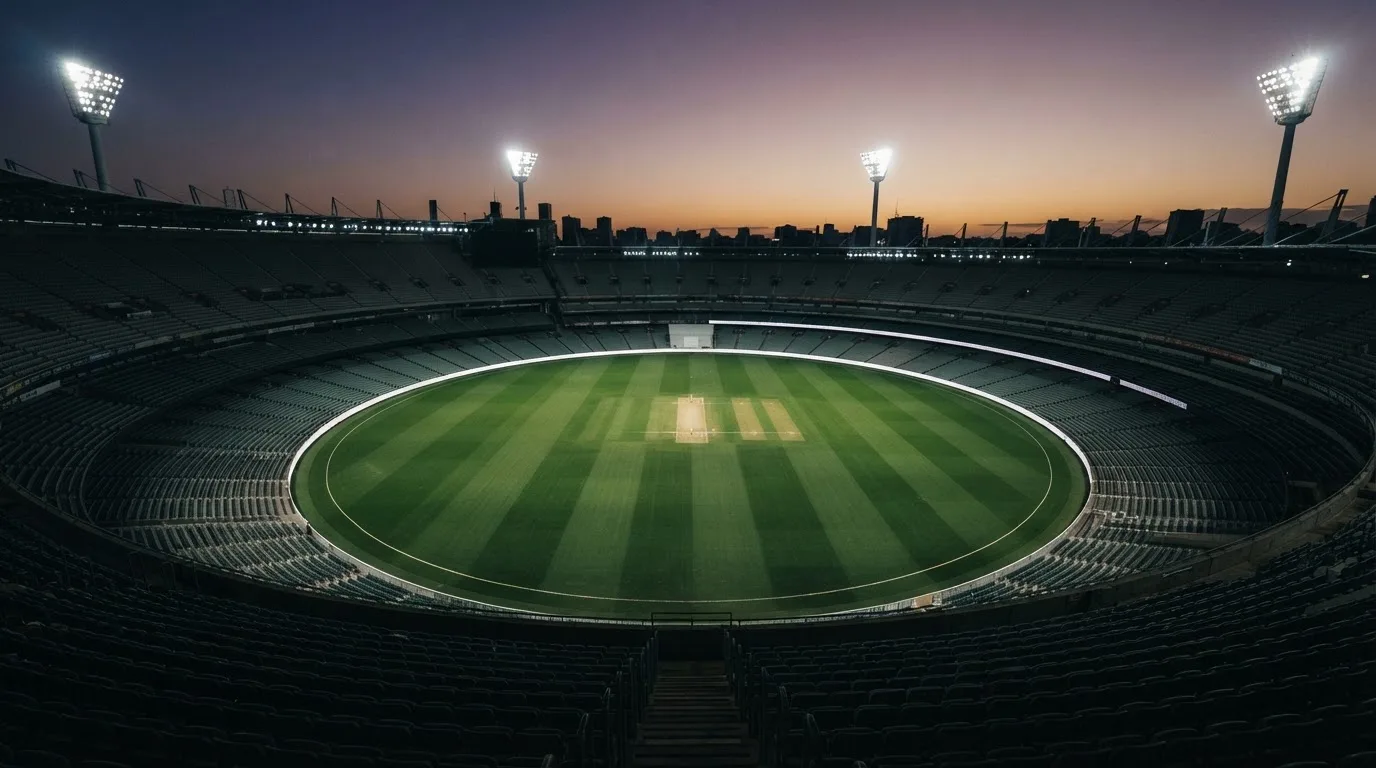
The Test market reads the pitch, the conditions, the four-bowler rotation and the new-ball phase. The T20 market reads six powerplay overs, two middle overs and a death-overs phase. The bookmaker’s edge looks bigger in the T20 because the model has fewer balls to learn from, and the bettor’s edge — if any — looks smaller for the same reason. Reading which format a price belongs to is reading what evidence the price rests on.
The fundamentals a cricket bettor carries into a market, condensed.
Format matters. A draw exists in Tests and is a real outcome. A tie exists in ODIs and T20s. A super over settles a tied T20. Rain-affected ODIs use the DLS method. Treating every cricket match as a two-outcome contest ignores the third and fourth outcome that exist in real life, and the bettor loses the cases where those outcomes hit.
Surface matters. A New Zealand seam track favours seamers and lowers run rates. An Indian turning track favours spinners and pushes totals down. A South African dry track favours batting first and pushing totals up. A bet that does not read the surface is a bet that doesn’t carry the conditions that shape it.
Squad matters. International sides rotate, rest and recall. A “best XI” price does not assume a best XI plays. Reading the announced XI at the toss is the cheapest step most bettors skip.
Margin matters. As laid out earlier, $1.90 across both sides means a 5% margin; $1.85 across both sides means closer to 7.5%; a multi-leg bet multiplies margins. Reading the margin once fixes the cost; reading it on every bet rewrites the bettor’s expectations of return.
The word “fundamentals” is also a reminder that betting on cricket is betting on the sport. The skill a serious cricket bettor has is the skill of reading the sport, the squad and the conditions. It is not the skill of finding a system that beats the book — those systems do not exist on any horizon long enough to matter.
TAB — the lawful New Zealand bookmaker
TAB is the retail and online brand most New Zealand readers meet first. The brand sits inside TAB NZ, which runs as the only lawful provider of racing and sports betting to people in New Zealand under section 74AAA of the Racing Industry Act 2020, in force since 28 June 2025. TAB NZ partners with Entain under a 25-year agreement signed in 2023 — the partnership gives Entain a 50/50 share of gross profits, with at least $150m a year going to TAB NZ for the first five years, and Entain pledged a one-off $100m payment to the racing sector. Entain is the same operator behind Betcha, so the trading desk crosses both brands. The TAB NZ licence is the Betcha licence; the two are one operator with two windows.
The product inside TAB covers horse and harness racing, rugby union, rugby league, cricket and other sports; pre-match and live. Cricket sits alongside the racing product and is a substantial international market for a betting app in New Zealand, given the volume of international fixtures a reader follows across the year. The safer-gambling tools — deposit limits, time-outs and self-exclusion — sit inside the app, and a self-exclusion applies across both TAB and Betcha because they share the licence. The age for betting is 18.
The cost of betting with TAB is the price TAB publishes plus the New Zealand pricing regime underneath it: a domestic bookmaker with full oversight, a verified New Zealand account, a New Zealand complaints route through TAB NZ’s own dispute process and the regulator as the second recourse. Winnings settle in the same currency the stake was deposited in. There is no offshore ambiguity about whether a withdrawal will land.
Verdict: TAB is the lawful cricket book for a New Zealand reader and the only one a regulator here will back. Where this page can name a single brand that fits the question “where may I lawfully bet on cricket in New Zealand”, this is the one.
Betcha — TAB NZ’s online sister brand
Betcha is the second online brand run on the TAB NZ licence by Entain New Zealand Limited, first released on the New Zealand App Store on 6 August 2024. Betcha is a sister, not a rival — TAB and Betcha are two doors into the same betting operation under the same Racing Industry Act 2020 section 74AAA monopoly. The product is otherwise similar: pre-match and live cricket, racing as a complement but a less racing-heavy navigation than TAB’s, mobile-first onboarding and a sports-punter marketing pitch that points away from the racing customer TAB has historically served.
The tech stack is shared with TAB because both brands run on the same partnership with Entain. The trading desk, the price feed and the settlement engine are common; the apps differ in surface. TAB carries the racing form, Blackbook and Jockey Challenge tools and a Trackside live race product that Betcha deprioritises. The cricket product is comparable — same ICC calendar, same international match list, same market depth — and a bettor who runs through both apps sees the same lines under different skins.
Betcha’s value for the cricket bettor sits in product surface rather than price. The app is newer, the navigation is sport-first, and a casual cricket punter who runs through Betcha finds the cricket markets higher in the menu. The pricing tracks TAB because the trader is the same. The promotion layer is distinct — Betcha runs a separate suite of bonus bets tied to the TAB NZ programme — and the operator terms govern how those bonus bets clear.
A practical note: where a self-exclusion applies across both brands under one licence, the cross-brand feature is the same. A user who opts out through TAB does not slip back in through Betcha. The licence sees one customer, not two.
Verdict: Betcha is the same betting operation as TAB, with a fresher interface for a cricket-first reader. Where the question is “must I open two accounts to chase a price difference”, the answer is no — there is no price difference to chase, because the trader is the same.
The offshore brands in this comparison — how to read the next eight
The eight remaining brands publish no New Zealand licence and cannot lawfully take a cricket bet from a New Zealand resident. The reviews that follow describe what each brand’s own terms say — sport coverage, market features and the licence claim — without inviting the reader to use them. The New Zealand reader is the judge of what to do with the information. The cost the New Zealand reader pays for using any brand in this set is the cost laid out in the statute section above.
Roobet — Curaçao-licensed, no New Zealand licence
Roobet publishes its sportsbook alongside a casino product, with sports covering soccer, basketball, tennis, Counter-Strike, FIFA, baseball, ice hockey, MMA and table tennis, age 18 and over. The list does not include cricket; the live site may carry a cricket tab the terms summary does not mention. The brand names a Curaçao licence (OGL/2024/687/0427) under holder Raw Entertainment B.V., and Curaçao is not New Zealand.
The cost the New Zealand reader pays here is the cost already laid out. An operator the Racing Industry Act 2020 prohibits from taking the bet, with no New Zealand complaints route, no New Zealand harm-minimisation framework in reach, and the operator bound by Curaçao law alone. A bettor who values a verified New Zealand identity and a New Zealand dispute path will not value what Roobet offers the same way; a bettor who values a particular market or a particular payment method may find what they want, knowing the trade-off.
Verdict: a brand built around a crypto-native product. Cricket is not named in the sportsbook terms. The licence gap is the binding constraint for any New Zealand reader.
FunBet — wide sportsbook, no New Zealand licence
FunBet offers football, ice hockey, American football, basketball, volleyball, tennis, rugby and baseball with live betting and a 24/7 customer-service presence. No licence that applies in New Zealand is named. Rugby makes the list, which is interesting for a New Zealand reader, but the legal position does not change. Cricket is not in the sportsbook list as research records it.
The product breadth beyond rugby is the main draw. Live betting and a 24/7 desk suggest an operation set up for a global cricket calendar across time zones, even where cricket itself is not formally listed. The New Zealand licence gap means the customer-protection regime that operates inside TAB NZ’s framework is not present.
Verdict: a generalist sportsbook with strong rugby. Cricket is not listed in the terms’ coverage. The New Zealand licence gap is the binding constraint.
Alawin — football-led bookmaker, no New Zealand licence
Alawin lists football, tennis, table tennis, basketball, ice hockey, American football and baseball in its sportsbook, with Live Betting, Virtual Sports and esports also offered. No licence that applies in New Zealand is named. Cricket is not in the list, and the product spread is a tier below FunBet on rugby. The presence of table tennis and esports is a hint at where the product depth sits.
The New Zealand reader’s cost calculation repeats. The presence of Virtual Sports carries its own risk envelope — virtual outcomes are model-run, not fixture-run, and a bettor who treats them as live sport is reading a different product than the one they bet on.
Verdict: a broad sportsbook covering football-forward markets. Cricket is not part of the named coverage. The New Zealand licence gap closes the option for a New Zealand reader.
Golden Panda — a casino-led brand with a sports side
Golden Panda structures its site as a casino-first product with a sports section on the side — sportsbook, esports and virtual sports. The site lists casino, live casino, crash games, rewards, cashback, a VIP Club, Golden Goals and Prediction Markets alongside sport. No New Zealand licence applies, and no offshore licence is named. Cricket is not named in the visible terms summary.
The risk envelope for a New Zealand reader is the same as for the rest of this offshore set, plus a casino-heavy product on the same account. Prediction Markets — short-form outcome markets on events outside sport — add a layer of model and counter-party risk on top of the offshore book. The casino product does not cure the licence gap on the betting side.
Verdict: a casino-led product with sport as a complement. Cricket is not part of the named sports coverage. The licence gap is the binding constraint.
Glorion — entertainment markets bundled with sport
Glorion publishes pre-match and live betting, virtual sports, horse racing and esports, with markets grouped into popular, niche, indoor and outdoor sports, plus entertainment events such as award shows and elections. No New Zealand licence applies. Cricket is not specifically named in the market grouping as recorded, and the “niche” sports bucket is where cricket most likely lives if it lives at all on the site.
The entertainment-markets spread is a feature not every operator carries, and it sits inside the same offshore licence as the sport. A New Zealand reader who wants cricket and entertainment novelty markets under one offshore roof may find the mix useful — knowing the licence gap.
Verdict: an offshore book with entertainment-markets depth. Cricket is not explicitly part of the named coverage in the terms. The licence gap is binding.
LegendPlay — Anjouan licence and a small-operator spread
LegendPlay offers Sports, Live Betting and Virtual Sports sections, with football, tennis, basketball and ice hockey listed. The licence named is Anjouan Gaming Authority, which does not apply to New Zealand. Anjouan licences are widely held and operate to a lower regulatory floor than Curaçao or Malta — the regulatory premise is essentially that the operator exists and has paid, not that much has been audited.
Cricket is not in the listed sports. A New Zealand reader using LegendPlay takes on the known limits of the Anjouan framework: limited recourse for a consumer dispute, weaker KYC checks, less robust segregation of customer funds.
Verdict: a small-operator offshore sportsbook with a typical Western-sport product. Cricket is not named. The Anjouan licence is the binding constraint, and the regulator’s limited reach is part of the cost.
Sportaza — Asian lines and interval markets
Sportaza publishes cash out before an event or market is finalised, Bet Builder (where a void leg voids the whole betslip), multiples, Asian lines and interval markets in 1, 5, 10 or 15-minute ranges. The licence is Anjouan (ALSI-202606064-FI2), and that licence does not apply in New Zealand.
Asian lines and interval markets are tournament-grade features aimed at a sharper customer. Cricket is not covered on this page, and the feature spread sits naturally with football and basketball. A New Zealand reader’s cost calculation is the same as on the rest of the offshore set, plus the sharper-product complexity for a less experienced reader.
Verdict: a sharper-feature offshore book built around football and basketball. The licence gap is the binding constraint; the feature depth is its own learning curve.
RoyalistPlay — Tobique licence, European-tilted markets
RoyalistPlay’s sportsbook offers live betting, sports promotions, results and a schedule, with football, basketball, tennis, handball, ice hockey, volleyball and table tennis among the top sports, plus separate e-sports and Predictions sections. The licence is a Tobique Gaming Commission e-gaming licence (No. 0000002) under holder Novatrix SRL; Tobique does not apply in New Zealand. Cricket is not among the top sports listed, and the product spread leans European — handball, volleyball and table tennis — sports popular in Europe but not in New Zealand.
The Predictions section is a feature aimed at short-form outcome markets. A New Zealand reader’s cost calculation repeats. The Tobique regulator has not signed any commitment that reaches a New Zealand bettor.
Verdict: a European-tilt offshore sportsbook with a strong secondary market in predictions. Cricket is not listed. The Tobique licence is the binding constraint.
A worked example: the margin a reader actually pays
A two-way cricket market priced at $1.90 for either side does not give a 100% payout. Each dollar staked, the bettor recovers about 95 cents across both outcomes; the operator keeps about 5 cents on the dollar in the long run. Reading the margin once, in numbers, fixes the cost in the reader’s head and makes the difference between adjacent prices concrete.
A $1.90 / $1.90 two-way market gives a payout share of about 95% — calculated as 1 ÷ (1÷1.90 + 1÷1.90) — and a margin of about 5%. The same market at $1.85 / $1.85 sits at a payout share of about 92.5% and a margin closer to 7.5%. A market with three or more selections — top batsman, method of next dismissal — carries a wider margin, usually 8%–12%, because more outcomes means more modelling error for the operator and more buffer inside the prices.
The margin is not a fee the reader pays up-front. It is the slice of staking that disappears into the operator’s pocket across many bets, averaged out. A bettor staking $100 at a 5% margin loses $5 on average before any skill difference is priced in; a bettor staking $100 at a 7.5% margin loses $7.50 on average. The price difference looks small in a single bet — $1.90 versus $1.85 — but compounds across 200 bets at $100 each to roughly $500.
This is a statistical estimate, not a forecast of any single bettor’s return. It is presented as an average across many bets under the stated assumptions — what clearing the offer costs on average, never what an individual session pays out.
The point is not that one price is the right price. It is that every price sits on top of a margin, and the margin is what the reader pays for the privilege of having a bookmaker at all. The skill question, where it exists, sits inside the margin, not above it. Beating a 7.5% margin is harder than beating a 5% margin, all else equal.
Frequently asked questions
How does a cricket bet settle?
A cricket bet settles once the match result is final, according to the operator’s published settlement rules. A Test match can end in a draw, which is a third outcome alongside win and loss; an ODI can tie if the chasing side finishes level when all out or out of overs; a rain-affected ODI uses the Duckworth-Lewis-Stern method to set a par score; a tied T20 is decided by a super over. Player-performance markets usually carry a minimum-overs clause. Reading the settlement rules once is the cheapest habit a new cricket bettor can take.
Who is the only lawful cricket bookmaker in New Zealand?
TAB NZ is the only provider lawfully offering racing and sports betting to people in New Zealand since 28 June 2025. Section 74AAA of the Racing Industry Act 2020 prohibits any other operator from taking a cricket bet from a person in New Zealand. TAB and Betcha are the two online brands of TAB NZ, run on the same TAB NZ licence by Entain NZ; both are lawful options for cricket betting, and both are the same operator with two windows.
How does a cricket price become a payout?
A decimal price multiplied by the stake is the total returned. A $10 bet at $2.10 returns $21 — $10 stake, $11 profit. A $10 bet at $1.50 returns $15 — $10 stake, $5 profit. For a multi bet the legs multiply into one combined price, and the combined price multiplied by the stake is the total returned. The price already sits on top of the bookmaker’s margin, which is why a “fair” $2.00 ($1 stake returning $2) is rarely what a cricket bettor actually sees.
What is the bookmaker’s margin and how does it show in the price?
The margin is the slice of every dollar staked the bookmaker keeps on average across many bets. A two-way market at $1.90 each has a payout share of about 95% and a margin of about 5%. A market at $1.85 each sits at a payout share of about 92.5% and a margin closer to 7.5%. Lower prices carry smaller margins; higher prices carry wider ones; multi-leg bets multiply margins across the legs. A bettor who reads the margin once fixes the cost of the market in their head.
Can a New Zealand reader legally bet on cricket with an offshore bookmaker?
The law targets the operator, not the player. Section 74AAA prohibits an offshore bookmaker from taking a sports bet, including cricket, from a person in New Zealand since 28 June 2025; section 19(4) of the Gambling Act 2003 says an individual cannot be convicted simply for placing such a bet. The Department of Internal Affairs warns that offshore operators may not return unspent credits, may not pay out large wins, and operate under minimal consumer-safeguard regimes. There is no New Zealand complaints route against an offshore bookmaker, and no published penalty for the player has been recorded.
Created by the ”Kiwibettingsites” editorial team.